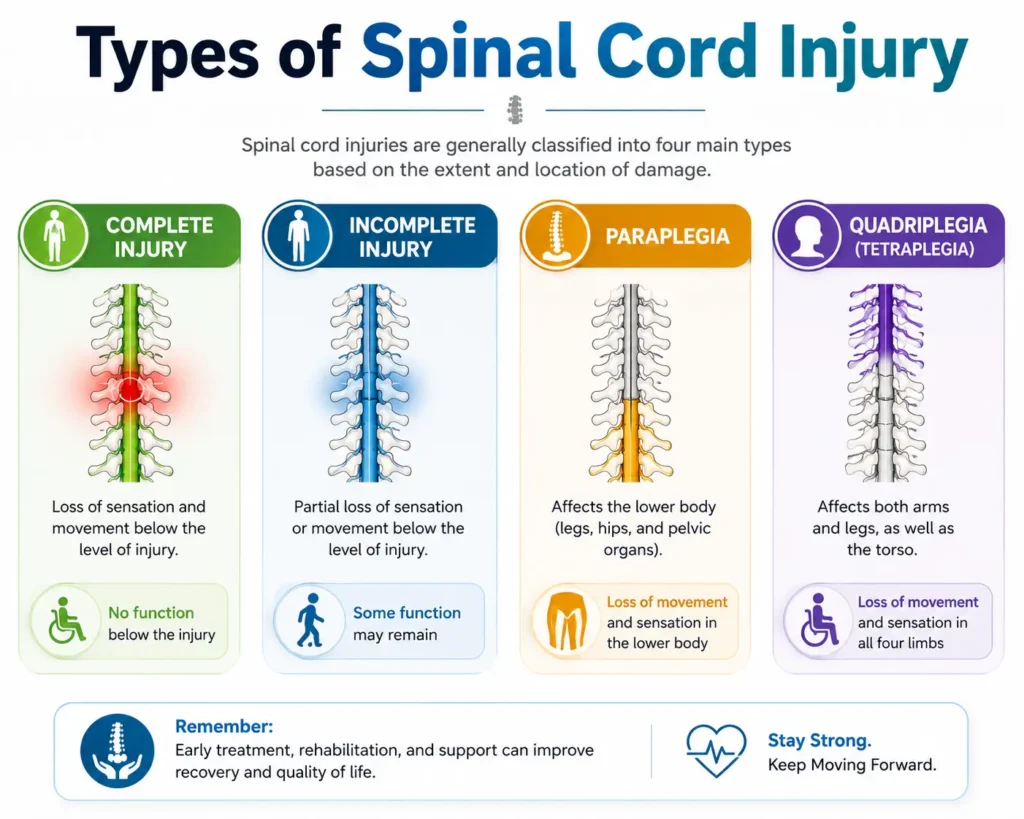
Types of Spinal Cord Injury: Understanding the Different Forms, Symptoms, and Treatment

The spinal cord is one of the most vital parts of the nervous system, acting as the communication pathway between the brain and the rest of the body. Every movement, sensation, and reflex depends on the smooth transmission of signals through the spinal cord. When this delicate structure is damaged, the consequences can be life-changing, affecting mobility, sensation, bladder and bowel function, and overall independence.

A spinal cord injury (SCI) can occur suddenly due to trauma or develop gradually because of certain medical conditions. The severity of the injury depends on the location and extent of damage to the spinal cord. Some people may experience temporary weakness or numbness, while others may lose movement and sensation below the level of the injury.

Understanding the types of spinal cord injury is essential because treatment, rehabilitation, and long-term outcomes vary significantly depending on the nature of the injury. At Solaris Hospital, our experienced neurosurgeons, neurologists, spine specialists, and rehabilitation experts work together to provide comprehensive care for patients with spinal cord injuries, helping them regain function and improve their quality of life.

Types of Spinal Cord Injury

What Is a Spinal Cord Injury?

A spinal cord injury refers to damage to the spinal cord that disrupts communication between the brain and the body. The injury may result from a direct impact, fracture or dislocation of the spine, compression of the spinal cord, or diseases affecting the spinal column.

Unlike injuries to muscles or bones, damage to the spinal cord can have long-lasting neurological effects because nerve cells have a limited ability to regenerate. Depending on where the injury occurs, a person may experience weakness, paralysis, altered sensation, chronic pain, or loss of bladder and bowel control.

Spinal cord injuries are considered medical emergencies. Early diagnosis and prompt treatment can significantly improve recovery and reduce permanent disability.

How Are Spinal Cord Injuries Classified?

Doctors classify spinal cord injuries based on the extent of nerve damage and the level of the spinal cord affected. These classifications help determine prognosis, treatment options, and rehabilitation goals.

Complete Spinal Cord Injury

A complete spinal cord injury occurs when there is a total loss of motor function and sensation below the level of the injury. The communication pathway between the brain and the affected part of the body is completely interrupted.

Individuals with complete spinal cord injuries are unable to voluntarily move muscles or feel sensations below the injured segment. Depending on whether the injury affects the cervical, thoracic, lumbar, or sacral region, paralysis may involve all four limbs (tetraplegia) or only the lower limbs (paraplegia).

Although complete injuries are among the most severe, advances in rehabilitation, assistive technologies, and multidisciplinary care have greatly improved long-term quality of life.

Incomplete Spinal Cord Injury

An incomplete spinal cord injury means that some nerve signals can still travel through the injured area. As a result, individuals retain varying degrees of movement or sensation below the injury.

The extent of recovery depends on the severity of nerve damage and the effectiveness of rehabilitation. Many patients with incomplete injuries experience gradual improvement over time through physiotherapy, occupational therapy, and medical treatment.

Incomplete injuries are generally associated with better functional outcomes than complete injuries because some neurological pathways remain intact.


Types of Incomplete Spinal Cord Injury

Incomplete spinal cord injuries are further classified based on the pattern of neurological impairment.

Anterior Cord Syndrome

Anterior cord syndrome affects the front portion of the spinal cord, usually due to trauma or reduced blood supply. Patients often lose the ability to move voluntarily and may lose pain and temperature sensation below the injury. However, touch, vibration, and position sense are often preserved because the back portion of the spinal cord remains relatively unaffected.

Central Cord Syndrome

Central cord syndrome is one of the most common incomplete spinal cord injuries, especially in older adults with cervical spine degeneration.

Individuals typically experience greater weakness in the arms than in the legs because the nerve fibres controlling the upper limbs are more centrally located within the spinal cord. Hand coordination may also be significantly affected.

Many patients show gradual improvement with rehabilitation, although recovery varies depending on age and severity.

Brown-Séquard Syndrome

Brown-Séquard syndrome occurs when one side of the spinal cord is damaged. It may result from penetrating injuries, tumours, or severe trauma.

Patients often lose muscle strength and fine touch on the same side as the injury while losing pain and temperature sensation on the opposite side. This unique pattern helps neurologists identify the location of the spinal cord damage.

Posterior Cord Syndrome

Posterior cord syndrome primarily affects the back portion of the spinal cord. Patients usually retain muscle strength but experience difficulty sensing vibration, position, and fine touch. Balance problems are common because the brain receives limited information about body position.

This type is relatively rare compared to other incomplete spinal cord injuries.

Types of Spinal Cord Injury Based on Location

The symptoms of a spinal cord injury also depend on which section of the spine is affected.

Cervical Spinal Cord Injury

Injuries involving the neck are generally the most serious because they can affect both the arms and legs. Severe cervical injuries may also impair breathing and require ventilatory support. High cervical injuries often result in tetraplegia, previously known as quadriplegia.

Thoracic Spinal Cord Injury

Thoracic injuries primarily affect the chest, abdomen, and lower limbs. Individuals usually retain normal arm function but may experience paralysis or weakness in the legs along with impaired balance and trunk control.

Lumbar Spinal Cord Injury

Lumbar injuries mainly affect the hips, legs, bladder, and bowel. Many individuals retain upper-body function but experience difficulty walking or standing without assistance.

Sacral Spinal Cord Injury

Sacral injuries are generally less severe than injuries higher in the spine but can significantly affect bladder function, bowel control, and sexual function. Weakness in the legs may also occur depending on the extent of nerve damage.

Common Causes of Spinal Cord Injury

Spinal cord injuries can result from both traumatic and non-traumatic causes.

Traumatic injuries commonly occur due to road traffic accidents, falls from height, sports injuries, workplace accidents, or acts of violence. These injuries often involve fractures or dislocations of the vertebrae that compress or damage the spinal cord.

Non-traumatic spinal cord injuries may develop because of spinal tumours, infections, inflammatory diseases, degenerative spine disorders, or reduced blood supply to the spinal cord. Although these conditions may progress more gradually, they still require timely diagnosis and treatment.

Symptoms of a Spinal Cord Injury

The symptoms vary depending on the level and severity of the injury. Some patients experience symptoms immediately after trauma, while others develop gradually if the cause is non-traumatic.

Common symptoms include:

• Weakness or paralysis of the arms or legs
• Loss of sensation below the injury
Numbness or tingling
Severe neck or back pain
Difficulty walking
Loss of bladder or bowel control
Muscle spasms
Breathing difficulty in high cervical injuries

Any sudden loss of movement or sensation after an injury should be treated as a medical emergency.

How Is a Spinal Cord Injury Diagnosed?

Early diagnosis is essential to prevent further neurological damage. Doctors begin with a neurological examination to assess muscle strength, sensation, and reflexes.

Imaging studies such as X-rays help detect fractures, while CT scans provide detailed information about bone injuries. MRI is the gold standard for evaluating the spinal cord, ligaments, discs, and surrounding soft tissues.

Additional neurological assessments may be performed to determine the severity of the injury and guide treatment planning.

Treatment Options

Treatment depends on the type, severity, and cause of the spinal cord injury.

Emergency care focuses on stabilising the spine, preventing further damage, and maintaining breathing and circulation. Some patients require surgery to relieve pressure on the spinal cord, stabilise fractured vertebrae, or remove tumours.

Following acute treatment, rehabilitation becomes the cornerstone of recovery. Physiotherapy, occupational therapy, pain management, mobility training, and psychological support help patients maximise independence and improve their quality of life.

Modern rehabilitation techniques, robotic-assisted therapy, and assistive devices continue to improve outcomes for many patients with spinal cord injuries.

Why Choose Solaris Hospital for Spine Care?

At Solaris Hospital, our multidisciplinary team provides advanced care for patients with spinal cord injuries, from emergency management to long-term rehabilitation. Our experienced neurosurgeons, neurologists, orthopaedic spine surgeons, physiotherapists, and rehabilitation specialists work together to develop personalised treatment plans tailored to each patient’s needs.

With advanced imaging technology, modern surgical facilities, and comprehensive rehabilitation services, we are committed to helping patients achieve the best possible recovery after spinal cord injury.

Conclusion

Understanding the types of spinal cord injury is crucial for recognising the seriousness of these conditions and seeking timely medical care. Whether the injury is complete or incomplete, traumatic or non-traumatic, early diagnosis, specialised treatment, and comprehensive rehabilitation can significantly improve recovery and quality of life.

At Solaris Hospital, our expert spine and neurology team is dedicated to providing advanced diagnosis, surgical care, and rehabilitation for patients with spinal cord injuries. If you or a loved one experiences symptoms of a spinal cord injury, prompt medical evaluation can make a meaningful difference in recovery and long-term neurological health.

A complete spinal cord injury causes total loss of movement and sensation below the injury, whereas an incomplete injury allows some nerve signals to pass through, preserving varying degrees of function

Recovery depends on the severity and type of injury. Incomplete injuries generally have a better chance of improvement with treatment and rehabilitation.

Cervical spinal cord injuries are usually the most severe because they can affect all four limbs and, in some cases, breathing.

No. Some spinal cord injuries can be managed without surgery, while others require surgical intervention to stabilise the spine or relieve pressure on the spinal cord.

Immediate medical attention is essential. Early diagnosis and treatment can reduce complications and improve long-term outcomes.

Contact Us Today

Solaris Hospitals

Service Road, Ghodbunder Rd, next to AP Shah Institute of Technology, Kasarvadavali, Thane West, Maharashtra 400615

022-4004 4001

022-4004 4003

+91 86556 96500

contact@solarishospitals.com